The reason Furl can act without breaking things.
Continuous remediation starts with context. Before Furl touches anything, it knows the environment cold — every endpoint, every person, every actionable target, and how they all connect.
That's not a feature. That's the prerequisite for autonomy you can trust.
"Context-aware" is what every vendor claims. Context engineering is what Furl actually built.
The difference matters. Context-aware tools react to environmental signals. Context-engineered systems are designed around environmental state — built so every action draws on a live, structured understanding of what's running where, who owns it, and what depends on it. Without that, autonomous execution is a liability. With it, autonomous execution is a product.
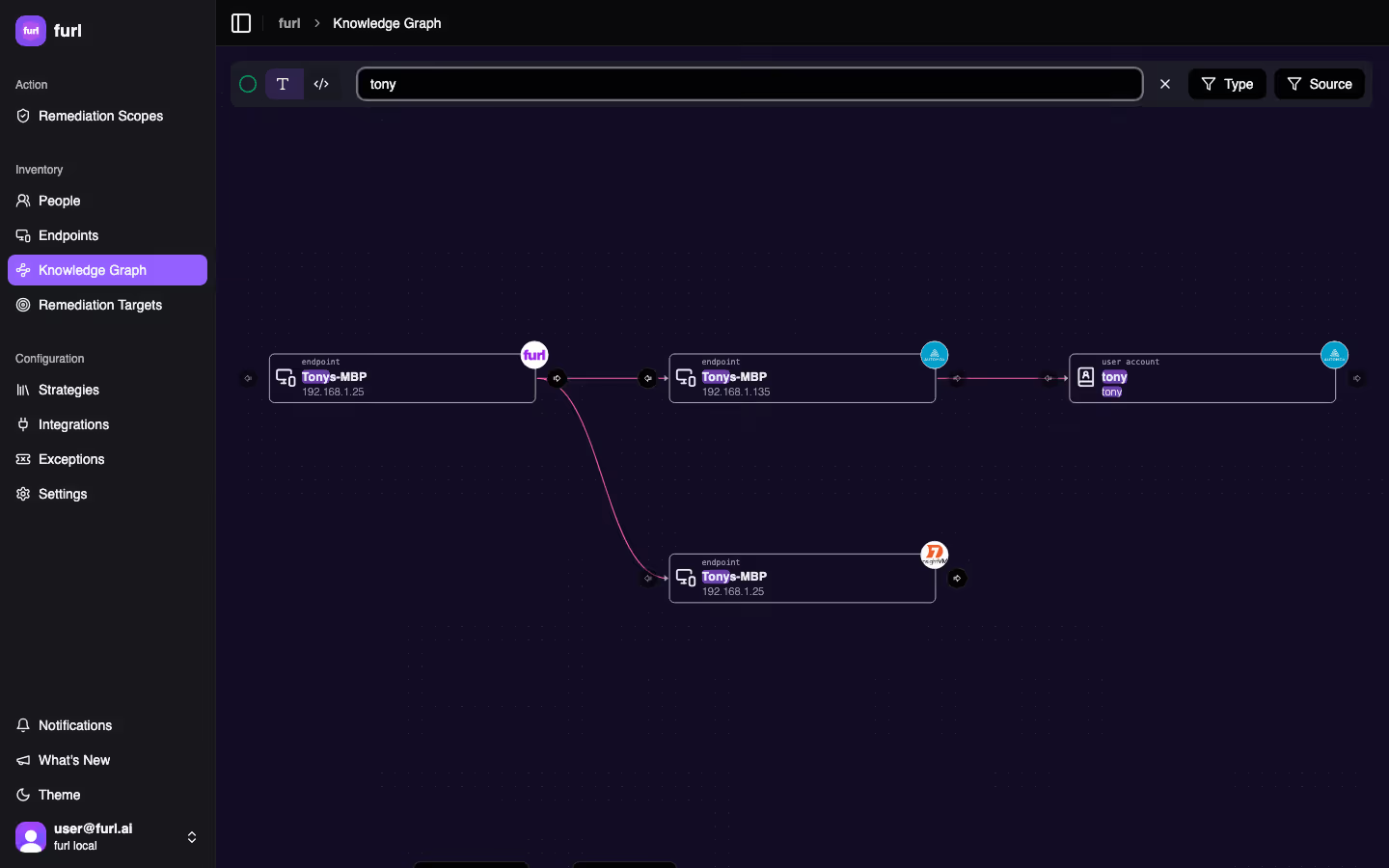
A live map of your environment.
Furl maintains a continuously updated graph of your fleet. Not a snapshot. Not a CMDB export. A live structure that reflects reality, refreshed as your environment changes.
The graph holds everything Furl needs to decide whether a fix is safe to ship:
Endpoints
Every machine in scope. OS, version, configuration, last-seen state.
Owners
Who's responsible for each endpoint. So fixes route — and notifications land — in the right place.
Actionable items
Every finding tied to the exact host it lives on. Deduplicated across scanners. Pinpointed, not aggregated.
Relationships
How endpoints, software, and findings connect. What depends on what. What breaks if something changes.
Knowing your environment is what makes safe execution possible.
Every time Furl considers a fix, the graph informs the decision:
The autonomy fear has a name. Context is the answer to it.
The reason security teams hesitate to let agents act on their fleet is well-founded: a tool with reach across thousands of endpoints can break thousands of endpoints. Recent security events have taught the industry that lesson at scale.
Context engineering is what separates Furl from the systems that broke. Furl doesn't roll out blindly. It rolls out informed — by the graph, by the relationships, by the business impact, by what's already in place.
That's why scopes work. That's why validation works. That's why rollback works. The graph is what makes all of it operate on real-world state, not assumptions.